
The Absence of Presence
Index
Introduction
You not me
The best years of my life
Beyond right and wrong
Reaching out
A line of men
A larger pattern
Salvador Ramos
A balance
A perfect storm
A repeating pattern
Elliot Rodger
Hidden symmetry
We belong now
Coming of age
A systemic perspective
The killing fields
Fields within fields
The trauma of displacement
The absence of presence
Dynamics not labels
A constellation
Links and resources
“A moralist is someone who uses a very small measuring instrument for the great world.”
Bert Hellinger

There are many complex and overlapping dynamics that lead a young man to walk into a school and shoot children, whilst knowing that they too will die in the process. As everyone struggles to come to terms with the grief and the apparent senselessness of each mass shooting, many opinions emerge, especially perhaps around gun licensing.
However, changes in public opinion and gun licensing don’t seem to prevent the shootings from happening again and again. In fact, the evidence points in the other direction – the more guns are restricted, the more people buy them so they are not the ones without. There is no single or simple answer to this layered, complex field of trauma that affects so many.
There are perhaps however some hidden dynamics and deep patterns in the system which could be better attended to if people were more aware of them. This article explores some of them.
If we are to look at any trauma with a systemic perspective, a number of things will inform our enquiry. Firstly we will need to look with an open heart into the space beyond ideas of right and wrong. This way of seeing, far beyond ideas of blame or forgiveness, allows us to include all the hidden dynamics, in our view of the field. A field that is awash with hidden loyalties and existential searches for connection, completion and wholeness.
Radical inclusiveness underpins this applied philosophy, so a systemic perspective invites us to include everyone, not only the victims, but the perpetrators too. Looking at any system we must see the whole, or we exclude someone or something important and make intervetions at a level that has no lasting impact.
 Past, Present, Future
This article attempts to illuminate some of the hidden motivations, loyalties and dynamics behind the perpetrators of mass shootings and does so in honour of all the victims of this kind of violence in the past and present, with the intention of informing a different approach in the future.
As we look respectfully at what is and what was, we may start to see patterns. Patterns of connection and disconnection in a search for safe belonging that we all seek. We will look for trans-generational patterns at the individual, family and social-system levels. For these patterns, passed on from one generation to another in the past, can deeply influence responses, behaviours and actions in the present. If we can see and then soften these patterns perhaps there is hope for a different future with less violence and trauma.
My research and writing process began when I heard about the shooting at Robb Elementary School in Uvalde, Texas on May 24th 2022. All that was known that evening was that an 18 year old boy shot his grandmother in the face before going to his old school and killing 21 young children and adults. There was something about those facts that got my attention – something about masculine and feminine energies and the nature of their absence or presence – and was the catalyst that took me deep into the subject. What I found over the next twelve months was very different than I expected. I never imagined that the trail would lead where it did, go so deep or come so close to home.
As a result of the process I went through, this article is of a considerable length, in the order of my own journey as I travelled with it. I encourage you to read it rather as I wrote it – in small parts with large breaks in between to reflect and digest.
Comments and questions are always welcome in the community here.
John Whittington, London, England. Summer 2023
Life Love Leadership (All links open in a new window, you will not lose your place)
On May 24th 2022 a young man killed 19 children and 2 adults at Robb Elementary School in Uvalde, Texas. One year later media outlets reflected on the sense of hopelessness as the pattern of repeated mass shootings continued.
As the short BBC montage here shows, in the year since, over 700 more people have been killed through gun violence in America.
In another report US President Joe Biden is seen, also on the first anniversary of the Uvalde shooting, in May 2023, speaking of the ‘killing fields’ that some schools and public spaces have become in the US. That short news conference video is here.
“The beginning of wisdom is to call things by their right names.”
Confucius
“Maybe you are searching in the branches for what only appears in the roots.”
Rumi
You, not me
Some of the common descriptions – used to imply reasons – given by the media and popular commentators for young men to kill others through shooting include these:
- They are a loner, with few friends and don’t fit in
- They are taking revenge for having been bullied at school
- They have previously been punished by the authorities for a minor offence and so were already heading down a dangerous path
- They are ‘depressed’, ‘a psychopath’, ‘bipolar’, ‘psychotic’ (or other label that makes them ‘other’ and ‘not like me or you’)
- They are in a rage from lack of sexual satisfaction and describe themselves as an ‘Incel’
- They are motivated by religious fundamentalism and/or racial hatred
- They are extremists on the ‘far right’, or the ‘far left’
- They took drugs, they drank too much, they played violent video games
- They failed to go to church and they didn’t pray
Many of these describe one aspect of observed behaviour of those who become, what the police and media then call ‘shooters’. However, whilst these descriptions and labels add up to a lot of pain they are rarely the true underlying trigger for a murder/suicide and they fail to see the boy or the world they live in as a series of nested systems, of wholes. Individualism is the dominant perspective and place where most interventions start and end.
My sense is that, just like in every other aspect of life and work their behaviours and the way they are labelled are simply external signs, that offer information about something else they are caught up in and about someone else, that’s not available to them.
An absence, an absence in the system.
The best years of my life
Whatever the truth of our lived experience as children, being a teenager is a challenging transition period for many, if not most people. Finding your sense of self and your place in the wider world can be daunting, frightening and at times feel impossible. It’s a challenge for most but made especially challenging if poverty, domestic violence or a difficulty in belonging safely at home is involved. If you then add a parallel lack of safety and belonging at school young men and women can spiral.
For boys and girls, those tender, complicated years around 16, 17 and 18 are some of the hardest to navigate and much has been written about the isolation, depression and existential challenge of transitioning from child to adulthood.
Such is the challenge of transitioning through the late teen years that the suicide rate amongst teens is now, in the western world, the highest on record. In a 2019 survey 19% of high school students in the US reported having serious suicidal thoughts and intentions (the actual figure is likely to be a lot higher) and 9% attempted suicide. Young white American teenagers have a higher suicide rate compared with Asian, Hispanic and Black adolescents. Up until the mid-teens rates are about the same for boys and girls. In late teens the rate of suicide amongst boys more than doubles that of girls. Here in the UK, young men who end their own life between the ages of 15 and 24 are three times more common than female suicides.
English singer/songwriter Sam Fender captures the isolation, sadness and anger of those late teenage years in many of his songs, especially perhaps one of his most popular, ’17 Going Under’.
See I spent my teens enraged
Spiraling in silence
And I armed myself with a grin
That’s the thing with anger
It begs to stick around
So it can fleece you of your beauty
And leave you spent with nowt to offer
It makes you hurt the ones who love you
You hurt them like they’re nothing
Amongst the white noise and boys’ boys
Locker-room talkin’ lads’ lads
Drenched in cheap drink and snide fags
A mirrored picture of my old man
Oh God, the kid’s a dab hand
Canny chanter, but he looks sad
God, the kid looks so sad
’17 Going Under’
By Sam Fender
Beyond right and wrong
However, even these complex teenage years are survivable and offer useful learning experiences if our young lives and emerging personalities are safely held by a loving and present family system around us.
As people struggle to make sense of a school or other public place mass shooting, a ‘difficult home life’ is often sited as one of the reasons for young men to turn to violence. Others point to what appears to be stable and loving homes and how the sudden trauma comes as a shock to the family.
“There is a tendency to immediately blame the parents,” says Andrew Solomon, professor of clinical psychology at Columbia University, who wrote a book about this subject. “My finding was they are by and large good people who are as shocked by this as anyone else.“
Andrew’s language is already in the ‘good’ and ‘bad’ frame and so when he claims that the parents are good (which implies that their child was bad) it is a limited and surface view.
If you scratch below the surface of the family system it usually reveals deeper truths. Of course they are very shocked, sad and often ashamed and so will often come across as modest, sensible, ‘good’ people. Which they are as, like every other human being they are doing their best with the resources they have. And yet all is often not quite as it seems, in subtle but vitally important ways. One of their children has lost their sense of a safe and resourced place in the family and in the world.
What’s observed in family system therapy and constellations, is that a great difficulty with finding our place in the world is often connected to a disruption in the relationship between our parents, the relative distance between them and their relationship with their parents – as well as to the communities and social fields they live and work in. How they belong. With each other but also in the outer world.
And in this context, their young sons who kill others, in one other very particular way.
“Unexpressed emotions will never die. They are buried alive and will come forth later in difficult ways.”
Sigmund Freud
“Give me a child until he is seven and I will show you the man.”
Aristotle
Reaching out
As we travel deeper into family system dynamics and look at our shared and innate need to belong – this is deeply connected with our father and, in turn, his struggle to find his place, his belonging.
This goes back to something very elemental that is seen in multiple constellation workshops and private sessions held in a family systems lens and method – that whilst both men and women can have an equal place in the outer world, a child looks to their mother for her focus ‘in’ – into the family – and to their father to see how he is in connection with the ‘out’ – the outer world.
This deeply unconscious tracking of the ‘in’ and the ‘out’ focus of our mother and then our father, resonates and leaves a dynamic imprint connected to belonging deep within us.
When we move into our teenage years, our inner map of how members of our family move and thrive in the ‘outer world’ that we are about to move into, is crucial if we are to make the transition ourselves.
If our father is ‘dis-located’ we will struggle to locate our own belonging.
This innate need to look at our father and see how he belongs in the world is perhaps particularly potent in boys and young men, where a disconnect between father and son can have painful, sometimes traumatic consequences. You can think of it as what is called in family constellations work an ‘interrupted reaching out’ movement. In other words, a young man reaches out towards his father and finds that he is not really there, not fully available to walk alongside him as he transitions from boy to man. It may be a gradual realisation or linked to a specific event (a disrespectful divorce, accident or other developmental trauma) in which he feels his father really let him down through his absence.
The boy makes a deep and private decision. Not to try again.
The decision to not try again is simply because it’s too unsafe and painful when he reaches and is not ‘met’ by his father. In this way he becomes separate, alone and lonely. As we saw above this is often the first description of a young man who shoots to kill. They are ‘a loner’. Instead of using that as a pejorative we could perhaps see it as information about their relative place in the family and their relationship with their father.
The ‘interrupted reaching out’ can often be found at the root of addiction. The boy reaches for the father and, if he’s not emotionally available, he finds something else to hold onto. Maybe a bottle, a needle, something to smoke. Or an idea or ideal to obsess about, one that shows his father and the world ‘I’m a man’.
A line of men
The synthesis of applied philosophy and psychology that characterises the systemic approach is about many things, and one of them is the impact of disconnection from our source, our roots.
For men, having their father available to them is a key factor in being able to move out into the world and find their place, build their own sense of belonging. If that is not possible the young man may become unhealthily attached to gaming, to sex, to drink, drugs, money or food. Or violence. All of these are signs, not just of disconnection from the father, but of dis-location from the self. They also illuminate his father’s challenge with safely belonging in the wider world.
“When our father is not able to belong, we also lose our sense of being allowed to belong.”
Bert Hellinger
“Mother connects us with life and father leads us into social life.”
Bert Hellinger
In Bert’s book ‘The Laws of Healing’ from which the “When our father is not allowed to belong, we also lose the sense of being allowed to belong” quote above is taken, he goes on to talk about the dissociation that occurs when we are not connected to those through whom our life emerged.
“We run alongside our own body, as it were, similar to how we would walk beside our father.”
Bert Hellinger
Bert’s observation is astute and can be seen in the level of dissociation required to shoot children at close range.
You have to be dissociated from your body and from the present to do that. In short, you have to be entangled in a larger pattern deeply held in the system around you.
A larger pattern
My sense is that Bert identified something very important here. However I also wondered as I tried to make some sort of sense of this kind of tragic and violent event, if the pattern goes further back. (That should perhaps be Father back).
In other words, if it is a multi-generational pattern, not just one absent father, but a line of disconnect and dislocation, a line of men reaching out across the generations, searching for connection.
Searching to be seen and met in their needs and searching for guidance as they transition from boyhood to manhood. Passing down an energetic inheritance of trauma, pain and associated survival strategies.
It always feels important to me to test these observations, ideas, ‘theories’ and intuitions, to see how they match with the actual people connected to the kind of events we are exploring here. And to see what else may be going on from a systemic perspective.
What follows is what I discovered, when holding this question.
I started with the young man who shot, wounded and killed, in May 2022, at home and then within Robb Elementary School in Uvalde, Texas, USA.
Salvador Ramos and his father.
Salvador Ramos
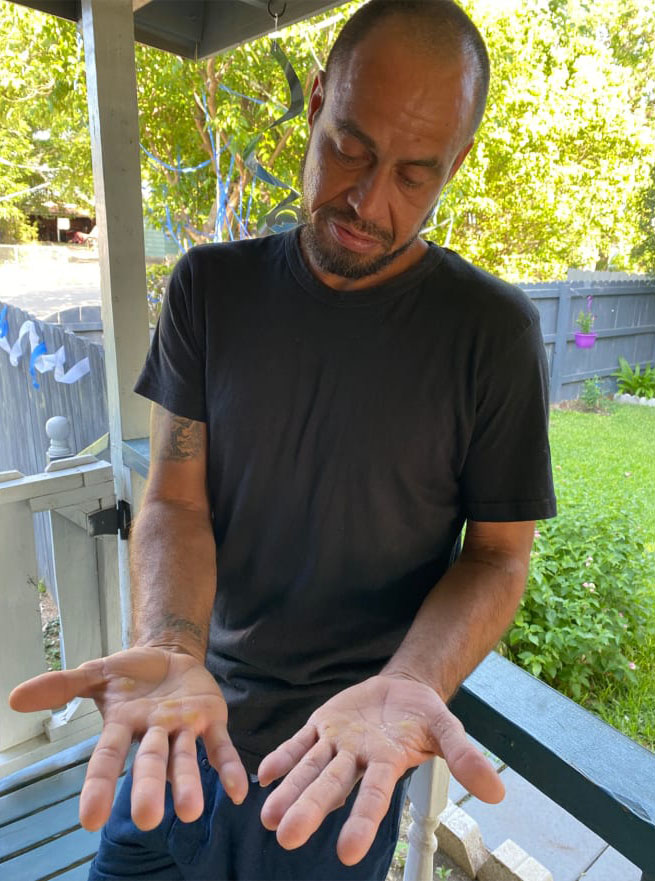 This is a picture of Salvador Ramos, the father of his eponymous son, who killed 19 children and 2 teachers in May 2022, at Robb Elementary School in Uvalde, Texas, USA.
Salvador senior fathered a daughter when he was 21 and then his son, Salvador junior, when he was 24. However, as the children grew into toddlers the relationship between the parents had deteriorated and ended. By the time their son killed in Uvalde, both he and his sister had distanced themselves from their father out of deep frustration, hurt and then anger for his lack of availability and presence in their lives.
This dynamic – a father keeping his distance from his own children – most often emerges from a disconnection from his own father and leads, as in this case, to a situation in which father and child didn’t see each other for extended periods, often years. The absence of the father’s presence persisted, despite several pleas from his son. Having reached the limits of his frustration and sadness Salvador broke all connection with his father.
He moved from connection to protection.
One month later, heavily armed, he shot his maternal grandmother Celia in the face and then killed children and their teachers inside Robb Elementary School. In his brief comments to the press after the shooting, Salvador Snr. referred to the disconnect between him and his son when he commented that he was surprised that he hadn’t come and killed him, because “He would always say that I didn’t love him.”
Salvador Snr. struggled through life and has a criminal record, including for assault of a family member. Sadly, there is a similar story behind the boy’s mother, Adriana Reyes too. Her father, Rolando Reyes is a convicted felon and it was he and his wife, Salvador junior’s maternal grandmother that he was living with at the time of the shooting, sleeping on a mattress in the front room. The family system emerged from a potent mix of poverty and family violence.
 So, whilst his son struggled to connect with him in life and find his place in the world, Salvador Jnr. did find a way of connecting to him in the end, through violent assault of a family member (his grandmother Celia Gonzalez) and then much more.
That dynamic, of repeating the deep life pattern of others who we also judge, is common and is a familiar thread for many of us human beings. In this case it led to “Limited and inconsistent involvement” by the father with his son, as a state report put it.
This kind of breakdown between a father and his son always leads to something painful. If it is mixed with other dynamics and happens within a social and political system that includes an explicit culture of gun violence, then it can end up in a very significant trauma. A personal and family trauma that has its roots in generational trauma and creates a large and powerful wave of more trauma across and through all the family and social systems it touches.
Salvador Ramos junior
The men behind Salvador were perhaps felt by the presence of their absence, going back through the generations. A line of men each struggling in life as they searched for a better connection with their father and then their sons. Perhaps that sentence ‘He always said that I didn’t love him‘ also belongs back then? These ‘life sentences’ often resonate and repeat through the generations. One of those men without connection to his father, becomes an absent father himself. 18 years later and twenty one people are brutally killed by his son and the presence of their absence is now felt deeply in the multiple family systems affected.
When there is not enough strength and presence available behind you, there is little to pass on, and it then becomes very hard to form a coherent sense of self as a young man. And very challenging to access the skills and patience required when becoming a father. And this is when the relationship with the boy’s mother comes into focus and either resources or further entangles the boy.
“Family pathology rolls from generation to generation like a fire in the woods, taking down everything in its path.”
Terry Real
“Sometimes the currency of belonging in a family system is suffering.”
Bert Hellinger
A Balance. Of masculine and feminine
From understanding a little about Salvador’s life I was reminded that it’s not always as simple as an unavailable father, from a line of unavailable fathers. There are others involved in this potent pattern, including the mother, other women and siblings. A young man who is not able or allowed to connect with his father will often find himself in the company of women – sisters, mother, grandmother. This was the case for Salvador. Just at the very point in his life when he most needed to move into the sphere of men and the masculine, he finds himself surrounded and perhaps overwhelmed by the feminine.
The dynamic often gets very complex when, as is often the case in separations and divorce, the father disrespects the mother and/or the mother talks in a disrespectful way about the father to her son. This is so common that, back in the 1980s, ‘parental alienation’ was described as a ‘syndrome’ by a US child psychologist. The idea that it is some kind of syndrome has since been discredited as a wider understanding that a child’s difficulties arise because of unfinished business between the parents. It is not the child’s responsibility, but the parents’.
However, it is also because there is so little support for endings in society, in particular perhaps around respectful endings of intimate relationships.
Whatever the individual circumstances and dynamics, it leaves the children with an inner split. In the case of young boys, they are left unable to integrate the part of themselves that is just like their father. This creates a deep, but largely unconscious loyalty in the boy to the father, that can easily become, especially if they feel emotionally inundated by their mother, a deep and hostile disrespect for women.
A young man is only able to form loving intimate relationships with women if he has his father’s safe and supportive energy around and behind him – and so is resourced to safely and respectfully leave his mother’s side.
This perspective may perhaps clarify why people who identify as an ‘incel’ (involuntarily celibate – sexually frustrated men who blame women for their misery and advocate violence against them) and who also commit atrocities, most often begin by attempting to kill their own mother (or other maternal figure like their grandmother or female teacher).
The combination of absent masculine energy and rage at the feminine can lead to great inner confusion and catastrophic outcomes.
“The ancients believed that, when male and female were balanced there was harmony in the world. When unbalanced, chaos.”
Dan Brown
The dynamic can be dangerously amplified if the boy’s mother talks about his father in a negative or judgmental way. Whilst it’s quite understandable that she feels aggrieved and abandoned, if she talks to her son about her feelings and especially if she implicitly asks him to support her through those feelings, it puts the son in a terrible position. Once again I find that Bert Hellinger articulated this very precisely:
“If the mother diminishes the father, she hinders her son from moving successfully out into society and sows in him seeds of anger that someday he will give back to her.”
Bert Hellinger
Finally, if the mother infantilises her son, keeps him as a small boy in her heart and mind, he is caught in a very painful place as he knows he is also not allowed to grow up. The last time Salvador Ramos saw his mother was the Monday before the shooting, his 18th birthday. She described, after the shooting, how she had approached that celebration of becoming a man:
“I had a card and a Snoopy stuffed animal to give to him.”
Abandoned by his father, then entangled and infantalized by his mother Salvador turned his rage on others and then himself. As we will see this pattern also underlies some other young men who shoot and kill.
Broken boundaries
There is often some other kind of systemic dynamic within family systems where there is a broken connection across the generations, one of personal boundaries and safety. It is alleged that there was sexual abuse in young Salvador’s life; abuse perhaps connected to one of his mother’s boyfriends. It is said that he was nine years old at the time – the very same age children he targeted in Robb Elementary school that day.
A month before the shooting he apparently told a friend “I have bad memories from that age.”
“A boy lives his prenatal and early childhood years primarily within his mother’s sphere of influence. If he remains there her influence floods his psyche and he experiences the feminine as all important and powerful. Under his mother’s dominance he may become a skilful seducer but he does not develop into a man who appreciates women. To become a man he must give up the first and most intimate love of his life – his mother – and move into his father’s sphere of influence.”
Bert Hellinger in his book ‘Love’s Hidden Symmetry’
A perfect storm
As we’ve seen with Salvador, before young men – caught in the kind of relationship system dynamics that he was – go out and kill others, they sometimes begin by shooting their own mother. In Salvador’s case it was the source of his mother – her mother, his grandmother. She survived, even though he shot her in the face. He was living with his grandmother because, two months earlier he had had a fight with his mother, who he described, on social media, as “a bitch.”
This combination of searching for the masculine, and the psyche flooded by the feminine, mixed with anger and grief over the loss of connection with the father, fear of being unable to find their place in the world, shame from having been abused and then of being rejected and bullied at school, then teenage hormones that take them to the peak of sexual frustration, must be overwhelming. It’s a ‘perfect storm’ of systemic, psychological and existential issues that have no safe container.
Without safe belonging and recognition for being the unique individual full of life and potential that they are, there is an internal crisis of identity and meaning. A storm rises. A storm of loss and shame expressed as anger, of rage expressed as violence and of loss of belonging expressed through the ultimate loss of belonging to the self.
t is perhaps these threads that connect so many young men who leave their home to shoot and kill. Rage at the father for his absence (too far), rage at the mother for her presence (too close), rage at peers for their shaming and shame in the self as a result of feeling unmet, unsafe and unable to belong.
If you add to this potent mix a judgement by a parent over their own child the storm turns into an existential crisis. For example when a father or a mother says, either explicitly or more commonly implicitly, ‘You are not (good) enough‘ they take the ground from beneath their son and show that they are not willing to be his foundation under him, or his resource behind him. We will see an example of that a little later.
A young man, emerging from poverty and a complex family system who is also then judged and dis-owned and so who, in his words almost became a school shooter.
As Freud and others describe in different ways, sons are often caught in an unconscious competition, with their fathers, for their mothers attention. If you add to that dynamic – a common mirror of the first – fathers who covertly compete with their sons, you have another deep and deeply destructive pattern in the field of the family system.
Unable to integrate the part of themselves that is like the parent who abandoned them, and unable to become themselves with their parents blessing and support, they are left with an inner dis-location.
In short, they cannot then find a safe way of belonging in the world with others. Any others.
A repeating pattern
It seems the presence of the absence of a father, or a safe and resourced father figure, may be one of the hidden contributing dynamics in the field behind Salvador Ramos. This, then combined with an entangled relationship with his mother, led me to explore if that was also true of other men who shoot to kill, whether at a school or elsewhere. A very brief summary of what I found, follows. I chose four mass shootings, each from a different country, so that my focus wasn’t just on North America: A school shooting in Dunblane, Scotland in 1996 where 16 children and their teacher were murdered; The Columbine High School shooting of 1999; The bombing in Oslo and subsequent mass shooting on a nearby island by Anders Breivik in July 2011, and the shooting in Plymouth, England in August 2021.
Thomas Hamilton, Dunblane
Two little boys who grew up to be international tennis players, Andy Murray (then aged 9) and his brother Jamie (then aged 10), were in an adjacent classroom when Thomas Hamilton walked into their primary school in Dunblane, Scotland on March 13th 1996 and, armed with four handguns, shot 16 children and their much loved ‘mother figure’ teacher, Gwenne Mayor, dead.

The family system behind the gunman Thomas, is complex and has some clear repeating systemic dynamics in it. In short, his mother was born in 1931, the ‘illegitimate’ daughter of a widow, Rachel Hamilton. To prevent a scandal, she was given away to close and childless relatives. James and Catherine Hamilton looked after Agnes until she was 19 when she fell in love with Thomas Watt, a local bus driver. They married in Glasgow in 1950 and in May 1952, their son Thomas was born. Eighteen months later, Thomas senior eloped with another woman. This repeating pattern and second family secret was also ‘hushed up’ for the same reason as the first – to avoid scandal in the local community of belonging.
Agnes went back to her adoptive parents who also adopted Thomas as their child. In this way he grew up thinking that his mother was his older sister and his aunt and uncle were his parents.
His actual father, Thomas Watt, is still alive and remains very anxious to deny any responsibility for the child he abandoned.
He said that he had had no idea whether his son was dead or alive until the Dunblane massacre. He proclaimed his own innocence and disowned his son again when he said this:
“I didn’t want to know, I had my new family to think about. People who know me know I’m a good man. I don’t want to be associated with Thomas Hamilton in any way.”
Thomas Watt, father of gunman Thomas Hamilton

Eric and Dylan, Columbine High
Eric Harris walked, with his friend Dylan Klebold, into Columbine High School on April 20th 1999 and together they killed 13 fellow students in what was then the largest mass-shooting in a US school.
Two years earlier Eric had written in his diary about the deep impact of his father’s absence through his repeated need to move with his work in the US Army. “When I left my friends I felt alone, lost and agitated that I had spent so much time with them and now I have to go because of something I can’t stop.” He blamed his father for moving the family around and forcing him to “start at the bottom of the ladder again.“
Harris also noted that other children often mocked his appearance, another pattern seen in almost every young man who goes on to shoot and kill. Bullying of who you are – what you look like is who you are when a teenager – can quickly become existential.
His friend Dylan Klebold also struggled with a change in belonging from one school to another and wrote in his diary that he felt that he was ‘not accepted or loved by anyone‘ and wanted to end his own life. Both had been ‘dis-located’. However, just like Eric, there was also a great difficulty between Dylan and his father. Seventeen years after the shooting his mother spoke publicly, through a TED talk.
Perhaps the most striking thing about that talk is the absence of any mention of Dylan’s father, as if he was not relevant, because he wasn’t present. To explore the potential impact of this dynamic and the impact of the mother’s presence in the way she herself describes it in her talk, see the section ‘The Balance of Masculine and Feminine’ above.
Anders Breivik, Oslo and Utøya island
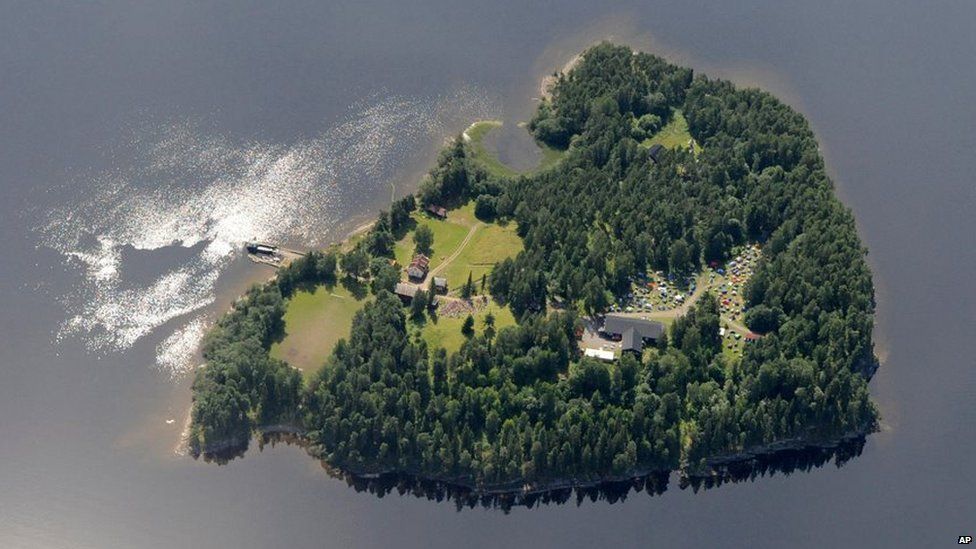
Anders Breivik is the man who killed eight people in a van bomb in the centre of Oslo and then took a boat to the island of Utøya where he shot and killed 69 young people who were camping there, in July 2011.
Even though he was much older than most of the other young men described here, he had very similar experiences as a teenager. Public shaming and then rejection. When he was 16 he was arrested for the minor offence of spraying graffiti. Later he tried to join the Norwegian armed forces but was rejected. So, he joined a gun club and, before the incident, wrote a long and angry manifesto about not belonging.
The main roots of his existential crisis were however in his family system. His parents separated when he was just a year old and he soon became distant from his father who tried to win custody from the distressed mother when Anders was four. However, he was left in the care of his mother through an administrative error (rather than being fostered) and this led to him being brought up by a woman who frequently told him how she had tried to abort him and still ‘wished he were dead’ – whilst simultaneously preventing contact with his father. He was rejected and then disconnected from his sources.
His father Jens – a diplomat who moved to France when he retired – had completely lost contact with Anders by the time he was a teenager.
Jens later said:
“I feel some guilt and responsibility. What would have happened if I had been a better father? Would Anders have done what he did?”
Jake Davison, Plymouth
On August 12th 2021 a 22 year old man called Jake Davison shot and killed his mother Maxine in the home he shared with her near Plymouth, England. He then walked out of the house and terrorised the neighbourhood, killing a father and his baby daughter and then two other adults, before shooting himself.
Jake’s father – who had divorced Jake’s mother some years earlier – was told that there would be a need for a Domestic Homicide Review Panel “As your wife was killed by your son, there’s a family dynamic we may be looking at“.
However, all of the media coverage was about how Jake’s father repeatedly said his son should not have been allowed a gun licence. There was no mention of the dynamics between father and son.
In the absence of a safe, present, emotionally available father, young men only have others’ opinions on what ‘a man’ is. Their mothers and siblings ideas. However, they are also likely to ignore those and search amongst other boys, men and media.
In this way their views are deeply informed by the prevailing social norms and messages they slowly internalise from social media, online games and other social sources of many kinds. School is perhaps one of the most potent places to pick up the messages, because, for many young men who do not have safety at home they will do anything to belong. If that fails too, then a cocktail of painful feelings and responses to those feelings emerge.
This short video brings to life just some of powerful, evocative influences that young men are exposed to as their emerging masculinity is established.
The pattern
What you will have noticed in these examples is not only the absence of loving father figures but also the wish by the perpetrator’s father to distance themselves from their own child. This is sometimes said explicitly, more often implicitly. An absent father and one who also judges his son is a very dangerous constellation indeed.
This pattern of covert judgement and paternal distance led me to explore one further example – the case of Elliot Rodger. His story opened up a much broader view of the subject that included fields of trans-generational family and social-system trauma – and so invite us all to look much more carefully into these systems to really understand what is going on behind and around young men who kill in this way. Please scroll down to read the second half of the article.
Like to read on?
To read the rest of this article you need to be logged into the community here.
Join and gain access to all the articles in just a couple of minutes.

Already a member?
Enter the password for this article then scroll down.

This article was authored by John Whittington.
The articles in this series provide an introduction to each subject
and what can be illuminated through systemic perspective.
This way of looking and working can be combined with others to give a deep and deeply useful understanding of the human condition.